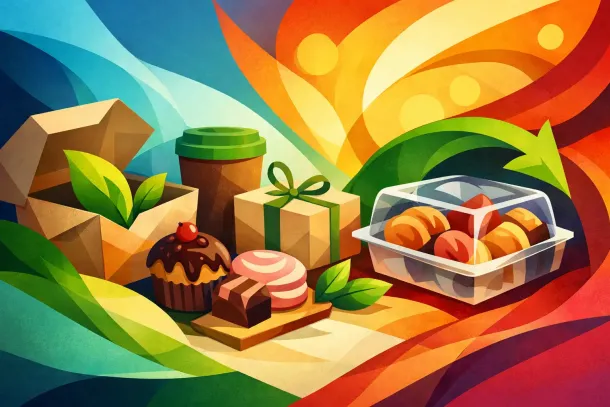
Anyone ordering a cake, fine pastries, or a gift set expects more than just good taste. The packaging is the first impression – and often the moment when it's decided whether a product appears high-quality, well-designed, and responsibly produced. That's precisely why sustainable packaging isn't a secondary consideration for confectioners, but rather an integral part of the overall experience.
Especially when delicate desserts Simply using "green" packaging isn't enough. A box must remain sturdy, protect creams, withstand moisture, and look good during transport. If a beautiful tart shifts or a macaron box gives way, even the best material is of little use. Sustainability, therefore, doesn't begin with the label, but with an honest question: What packaging is truly suitable for the product?
What sustainable packaging really means for a confectionery
In everyday life, sustainability in packaging is often reduced to paper. For a confectionery, this is too narrow a view. The crucial factor is the interplay of material, product protection, transport route, disposal, and actual use. A box that is too thin and needs to be replaced is rarely the better solution. Likewise, visually perfect packaging is pointless if it consists of several layers that are difficult to separate.
Packaging is sustainable when it reliably protects the contents, is produced using materials responsibly, and can be easily disposed of or reused after use. For sweet products, there's another important point: the packaging mustn't detract from the enjoyment. Nobody wants to receive an artfully decorated cake in a solution that sounds eco-friendly but is impractical, unstable, or unappetizing.
The most important materials in practical testing
There is no single perfect material for pastry shops. It depends on the type of product, weight, fat content, moisture content, and presentation.
Cardboard and paper for boxes and inserts
Cardboard is the most obvious choice for many applications. It has a high-quality look, is easy to print on, and is suitable for cake boxes, pastry boxes, or packaging for baked goods. Solutions with a high recycled content or made from virgin fibers from responsibly managed forests are particularly useful when food safety and stability are paramount.
Its strength clearly lies in its versatility. Cardboard can look elegant, provides reliable protection, and is a good visual match for artisanal confectionery. Things become more difficult with highly greasy or very moist products. Then coatings or inserts are needed – and that's precisely where the ultimate sustainability of the solution is determined.
Cellulose windows instead of classic plastic windows
Many customers want to see what they are buying or giving as a gift. This is especially true for macarons, petit fours, or decorated cakes. Viewing windows therefore remain attractive. It becomes more sustainable to use alternative transparent materials instead of conventional plastic windows, such as cellulose-based materials, provided they are suitable for the specific application.
A closer look is worthwhile here. Not every compostable window is automatically suitable for everyday use. Some types are more sensitive to moisture or lose clarity during prolonged storage. This might work well for pastries sold quickly, but less so for products with a longer presentation time.
Fiber form and bagasse for to-go and single portions
Molded fiber packaging is an attractive option for dessert cups, takeaway snacks, or small portions. Bagasse, a byproduct of sugarcane processing, is often mentioned when discussing resource-saving alternatives. Such materials can be durable and immediately convey a modern, conscious image to many customers.
However, much depends on the specific design. With very delicate confectionery products, not only function but also appearance plays a major role. A rustic fiber surface fits wonderfully with some concepts, but with luxurious pastries, it doesn't always suit the desired presentation.
Where sustainable packaging is particularly challenging in the confectionery industry
Not every product has the same requirements. Especially in confectionery, the challenges often lie in the details.
Cakes need stability above all else.
A cake is not a cookie. It has weight, height, delicate decorations, and often temperature-sensitive components. The packaging must support this weight without giving way. A sturdy cardboard box with a secure base, appropriate height, and a tightly closing lid is more important than any symbolic choice of material.
If the packaging is reusable or made from easily recyclable single materials, that's a real advantage. But when it comes to cakes, product protection takes priority. A damaged celebration cake not only causes disappointment but also food waste – and that's the worst possible outcome, both ecologically and economically.
Pastries and fine baked goods thrive on presentation.
For éclairs, tarts, donuts, or macarons, appearance is almost as important as taste. The packaging must therefore protect the product while simultaneously offering an appetizing view. Too much material looks cluttered, too little protection is risky.
Here, well-designed inserts, appropriate compartments, and precisely chosen formats are often more sustainable than standard boxes with a lot of empty space. Less air in the box usually means less material, less shifting, and a more precise brand experience.
Ice cream, desserts, and to-go items require different solutions.
Cold products, creamy desserts, and coffee-to-go have their own specific requirements regarding airtightness, temperature, and texture. Paper-based solutions can work well if the coatings are food-safe and as recyclable as possible. However, not every alternative lives up to its promises.
Those who communicate honestly here gain trust. Customers understand that not every package is perfect. They value meaningful improvements more than grand sustainability promises that don't hold up in practice.
Sustainable packaging for confectionery must also be beautiful.
Especially in the premium segment, packaging plays a significant role in determining a product's perceived value. Whether it's a birthday present, an elegant box for macarons, or a carefully wrapped cake for a special occasion, the packaging is crucial. special occasion It should evoke joy even before the first fork is picked up.
This doesn't mean that sustainability and aesthetics are mutually exclusive. On the contrary. Reduced, high-quality materials, clean lines, and well-chosen colors often appear more modern and sophisticated than elaborately laminated solutions. Less material can look more elegant if the details are right.
For a brand like Zoomserie, which combines enjoyment, expertise in special occasions, and visual quality, this is particularly relevant. Packaging shouldn't be didactic. It should support the product, emphasize the occasion, and project a responsible image without sacrificing charm.
What customers are looking for today
Many people want to shop more sustainably, but they don't want to sacrifice convenience, hygiene, or aesthetics. This is precisely where the real challenge for confectioners lies. The best packaging solution is rarely the most radical, but rather the most credible.
Customers are increasingly paying attention to three things: Does the packaging feel high-quality, does it appear genuinely sustainable, and does it function in everyday use? When all three points come together, sustainability is not experienced as a sacrifice, but as additional proof of quality.
Even small details matter. Easily separable components, clear disposal instructions, and formats that fit well into everyday life make a difference. Nobody wants to be guessing which part goes where. Good packaging is almost self-explanatory.
This is how you make a better decision.
Those who choose sustainable packaging for a confectionery should not only decide based on the material catalog, but should also consider the product range. A cake, A dessert glass and a macaron set require different solutions. It makes sense to develop packaging according to product groups rather than a one-size-fits-all approach.
After that, it's worth looking at real-world processes: How far is the product transported? How long does it remain in the packaging? Is it given as a gift, delivered, or taken along directly? Only these questions reveal which solution is viable. What looks good in the studio can quickly reach its limits in the car, on a bicycle, or at dinner with guests.
Equally important is a realistic test. Packaging should be tested with actual products, at real temperatures, and under typical transport conditions. Especially with confectionery, quality isn't revealed on paper, but after 20 minutes in transit, under light pressure in a carrier bag, or after an hour on the festive table.
The best solution lies between aspiration and everyday life.
Sustainable packaging in the confectionery industry isn't just a trend, but a design challenge with a responsibility. It should preserve enjoyment, protect products, and enhance the positive feeling of purchase. Not every solution is ideal, and sometimes a well-thought-out upgrade is a better approach than a complete overhaul.
Those who understand packaging in this way usually make the smarter decisions: less show, more substance, a better fit for the product. That's precisely where real progress begins – with a box that not only looks good, but deserves the moment it's held in your hands.