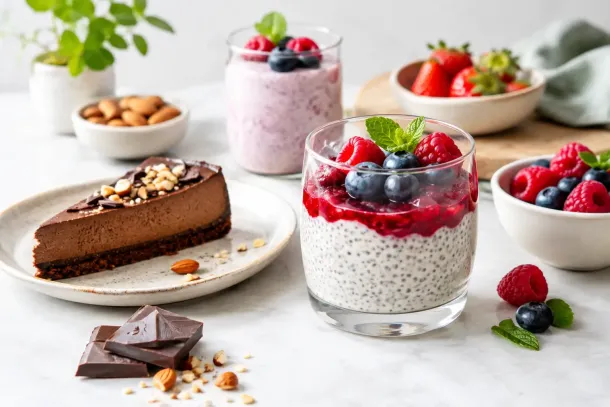
A velvety chocolate dessert, a fruity tart, or a festive cake should above all be one thing: a true moment of indulgence. That Sugar-reduced desserts are trending Just because something is sweet doesn't mean it has to taste deprived. On the contrary: many people crave sweets that are delicately composed, highlight high-quality ingredients, and feel pleasantly light even after the last bite.
Especially for birthdays, Coffee breaks in the office Whether it's a Sunday afternoon with the family or a leisurely meal, the perspective on desserts changes. Less sugar is increasingly seen as an invitation to enjoy them in a more nuanced way. Not every sweet dish has to be maximally sweet to be special. Often, chocolate, fruits, nuts, spices, and creamy textures gain even more expression when sugar isn't overpowering.
Sugar-reduced desserts are trending: What's behind it?
The desire for reduced-sugar recipes stems from various sources. Some customers are more conscious of their diet in everyday life, while others simply dislike excessive sweetness. Added to this is a growing interest in ingredients, craftsmanship, and distinct flavor profiles. Those who know how delicious a ripe raspberry, roasted hazelnut, or real vanilla can be expect more than just sweetness from a patisserie.
In pastry making, however, sugar performs far more functions than simply providing flavor. It gives creams volume, provides color to pastries, influences shelf life, and makes sorbets smooth. A good, reduced-sugar dessert, therefore, isn't created by simply removing sugar. It requires a new, precise balance. This is the subtle art behind desserts that appear light yet taste rich and full.
The occasion also plays a role. At a large celebration, a dessert can look opulent and festive without being heavy. An elegant cake with fruity acidity, delicate cream, and a crisp base can impress guests without overwhelming them after the first slice. For many hosts today, this is precisely what constitutes a mark of quality.
Less sugar, more character on the plate
Reduced sweetness works particularly well when other flavors are given ample space. Dark chocolate adds depth and slightly bitter notes. Citrus fruits provide a contrasting freshness, while berries offer natural fruitiness and acidity. Pistachio, almond, hazelnut, or sesame lend desserts a warm, roasted character. Coffee, tonka bean, cardamom, and a pinch of salt can also add complexity to the flavor.
"Reduced sugar" doesn't automatically mean "sugar-free." That's a crucial distinction. A dessert can contain less added sugar and still include fruit, honey, syrup, or lactose. Those who need to be very careful with sugar for health reasons should always check ingredients and labeling individually. For everyone else, it's often about a more balanced recipe and a more harmonious taste experience.
Fruit desserts are a good example. Ripe strawberries, apricots, or pears often need less added sweetness than ingredients that are naturally more subtle in flavor. When combined with a light cream, a crunchy crumble, or a delicate shortcrust pastry, they create contrast. And contrast makes a bite exciting.
Texture enhances the enjoyment
When sweetness is reduced, texture becomes even more important. Crisp caramel notes, a crumbly base, a creamy center, or an airy mousse can transform just a few ingredients into a dessert with real presence. Especially with small pastries, every bite counts. It should surprise, but never seem arbitrary.
Temperature also plays a role: A cool fruit sorbet, a slightly warm tart, or a creamy dessert straight from the refrigerator will taste differently intense. Those who consciously enjoy sweets perceive these nuances more strongly. This makes sugar-reduced creations not a substitute, but a unique and enjoyable experience in their own right.
Which desserts are particularly suitable
Not every classic dessert can be modified to the same extent. In some recipes, sugar is essential for structure, such as in meringue, caramel, or certain glazes. In these cases, a significant reduction can alter the consistency and the desired result. Other desserts offer considerably more flexibility.
Fruity tarts, cheesecakes with tart fruits, yogurt or quark creams, dark chocolate mousses, and nut cakes often benefit from a finely balanced sweetness. Dessert glasses filled with fruit compote, creamy layers, and crunchy accents are equally suitable. They look elegant, are easy to portion, and are perfect for celebrations where different tastes come together.
At Ice cream and sorbet The recipe is particularly important. Sugar influences the creaminess and prevents the mixture from freezing too hard. A successful reduced-sugar version therefore requires experience, high-quality ingredients, and a good feel for the right consistency. The result should not taste watery or crystalline, but rather fresh, rich, and melt pleasantly on the tongue.
Order consciously, without diminishing the occasion.
When choosing a cake or dessert platter for guests, you don't have to choose between impressive and balanced. It's helpful to consider the occasion: If the dessert is to be served after a rich dinner, lighter, fruit-forward creations are often particularly suitable. For afternoon coffee, on the other hand, something nuttier, more chocolatey, or creamier is appropriate.
In mixed gatherings, offering a selection is a lovely form of hospitality. A larger cake can be complemented by smaller pastry pieces or fruity alternatives. This way, everyone can find a favorite, and the dessert buffet It feels generous rather than one-sided. This creates a relaxed and enjoyable atmosphere, especially at birthdays, company parties, and family celebrations.
Portion size also deserves attention. A small, precisely crafted dessert can be more intense and satisfying than an oversized piece. This isn't a rule against generosity, but rather a plea for quality. Serving a delicate tart, a mini cheesecake, or a dessert in a glass creates space for curiosity and perhaps even a second flavor.
Individualization makes the difference
For special occasions, a dessert can reflect the spirit of the celebration: with favorite fruits, a coordinated color scheme, a personal message, or a selection of different flavors. Personalized planning is especially worthwhile if you have a sugar-reduced preference. How much should the sweetness be reduced? Which ingredients are desired, and which are not? Is the goal conscious enjoyment or addressing specific dietary needs?
Zoomserie combines this joy of individual moments of indulgence with a love for modern confectionery. Because a cake should be just as convincing on the table as it is at first glance – and especially when cut.
The new standard is not renunciation
Reduced-sugar desserts represent a trend that fits perfectly with today's culture of enjoyment: choosing more consciously, expecting more flavor, and still celebrating special moments. They are not an obligation or a rigid nutritional promise. A classic slice of Sachertorte has just as much place as a fresh berry tart with subtle sweetness.
What matters is what suits the occasion, the guests, and your own taste. Choosing desserts with high-quality ingredients, exciting textures, and clear flavors doesn't make less sugar the main focus of the evening, but rather a subtle detail that enhances the overall enjoyment.