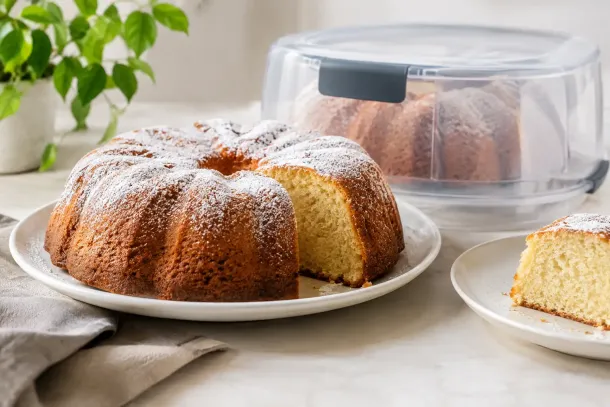
The first slice has been eaten, the candles blown out – and suddenly the crucial question arises: How can we proceed? Keep cakes really fresh, So that the second slice tomorrow still tastes like a celebration? The short answer is: not every cake deserves the same treatment. Creamy cakes love to be kept cool, moist sponge cakes need protection from air, and crispy tarts above all shouldn't get soggy.
With just a few simple steps, you can keep your cake fresh for longer. The key is choosing the right ingredients, room temperature, and a suitable container. After all, a beautiful cake should not only delight when served, but also be a welcome treat for a coffee break the next day.
Keeping cakes really fresh: The basic rule
The most common reason for dry cakes isn't time, but exposure to air. As soon as a cut surface is exposed, the cake loses moisture. Therefore, cover cakes as soon as possible after they have cooled. A cake dome, a tall cake container with a lid, or a tightly sealed box will protect the cake from drying out and from absorbing odors.
Cling film is a good solution for cut sponge cakes or Bundt cakes if it fits snugly around the cut surface. Wrapping the entire cake in it, however, isn't always ideal: it can leave marks on glazes or delicate decorations. A cake dome preserves the appearance and is a more aesthetically pleasing option for many cakes.
Location matters too. Direct sunlight, a spot next to the stove, or a warm windowsill are not good ideas. Cakes with long-lasting fillings are best kept at a cool room temperature, as long as the kitchen isn't too hot in summer. Anything containing fresh milk, cream, quark, mascarpone, or fruit, on the other hand, should be refrigerated quickly.
Which cakes belong where
Proper storage depends less on the name of the pastry than on its filling. A simple chocolate cake and a chocolate torte with whipped cream can have completely different requirements.
Pound cakes, Bundt cakes and loaf cakes
Classic cakes like pound cake, marble cake, lemon cake, or nut cake usually stay pleasantly moist at room temperature for two to four days. Store them under a cake dome or in an airtight container. However, a slightly warm cake should never be wrapped: the trapped moisture will cause condensation, the crust will become soft, and the flavor will suffer.
Cakes with icing also keep well at room temperature. Buttercream, which consists only of butter and sugar without any perishable ingredients, can also keep well at room temperature. However, on very warm days, refrigeration is the safer option – also to ensure the decoration retains its shape.
Cheesecake, quark cake and desserts with dairy products
Cheesecake, quark cake, and cakes with cream cheese filling should be covered and refrigerated. They will generally stay fresh for two to three days there. A cake box is ideal, as it protects against typical refrigerator odors and prevents the surface from drying out.
Take a piece out of the refrigerator about 20 to 30 minutes before eating. Directly from the fridge, the delicate vanilla, lemon, and cream cheese notes often taste less intense. A little time at room temperature restores the creamy texture and full aroma.
Cream cakes, mousse and buttercream cakes
Cakes with whipped cream, mousse, mascarpone, or custard must be refrigerated. Especially at parties, it's best to take the cake out of the refrigerator only shortly before serving and not leave any leftovers on the table for long. Two hours at warm room temperature is a reasonable limit.
When it comes to buttercream cakes, the type of cream is key. Classic buttercream is more stable than a whipped cream filling, but it still doesn't tolerate heat well. It's best kept in the refrigerator in a tall container or under a dome to protect flowers, lettering, and delicate decorations. Before cutting, the cake should be allowed to come to room temperature for about an hour. This will make the cream soft again instead of firm.
Fruit cakes and tarts
Fresh fruit makes cakes especially tempting, but often shortens their shelf life. Strawberries, berries, kiwi, or peaches release moisture and can cause the base to become soggy. Fruit cakes should therefore be covered, refrigerated, and ideally enjoyed within one to two days.
When it comes to a tart with a crisp shortcrust pastry, the trade-off is clear: refrigeration is usually necessary because of the fruit, but it does reduce the crust's crispness. An airtight container and eating it soon after are the best solutions. If possible, store fresh fruit or a crunchy topping separately and add it to the tart just before serving.
This keeps the cut edge juicy
A cut cake needs special protection at the open end. Carefully press a piece of cling film onto the cut edge without touching the cream or decoration. For sponge cakes, it's often enough to place the cut side down on a plate and then cover the cake with a cake dome.
Shallow, tightly sealing containers are ideal for leftover cake slices. Avoid stacking tall slices on top of each other, even if it seems tempting when cleaning up. The delicate cream, smooth glaze, and loving details of a celebration cake deserve their own space.
One small, often underestimated point: always cut with a clean knife. Crumbs, fruit juice, or cream residue can more quickly spoil the surface. When serving several types of dessert on a platter, it also helps to store strongly scented desserts, such as coffee or chocolate desserts, separately from delicate vanilla and fruit creations.
What really helps in the refrigerator
The refrigerator protects delicate fillings, but can dry out cakes. Therefore, covering them is not an afterthought, but an essential part of proper storage. Do not place cakes unprotected next to cheese, onions, or strong-smelling foods. Rich creams and airy bases absorb odors more easily than you might expect.
Choose a quiet spot in the refrigerator, not directly against the back wall. It can get very cold there, and delicate creams or fruits will deteriorate more quickly. A temperature of around 4 to 7 degrees Celsius is suitable for delicate cakes. For larger cakes... Order for a celebration When preparing, make room in the refrigerator beforehand – nothing is more annoying than a carefully decorated cake that doesn't have a secure place between tall pots and storage containers.
The same applies to transporting the cake home: Carry cakes that require refrigeration as upright as possible, don't leave them in a warm car in summer, and refrigerate them immediately upon arrival. For special occasions in Vienna, a high-quality cake from Zoomserie will thus bring joy not only when the box is first opened, but also during the coffee gathering afterwards.
Freezing cakes: When it's worth it
Not every leftover has to be eaten within a few days. Many cakes freeze beautifully – especially pound cakes, brownies, sponge cakes, and cheesecakes without fresh fruit for decoration. It's best to cut the cake into portions, wrap each piece airtight, and freeze it as fresh as possible.
Cream cakes, mousse, and fresh fruit often change their consistency when thawed. The cream can absorb water, fruit becomes soft, and a smooth coating doesn't always look as pristine as it did on the day of the celebration. With such cakes, enjoying them within a short time is the better option.
To defrost, place individual slices in the refrigerator overnight, or allow a simple sponge cake to defrost slowly at room temperature. Microwaving is only suitable for unglazed, uncomplicated pieces – it can quickly make the dough rubbery and damage delicate fillings.
Three mistakes that make good cakes go stale faster
First: Wrap cakes in warm packaging. The steam cannot escape and makes bases, crumbs, and glazes unnecessarily soft. Second: Leave delicate cakes at room temperature for extended periods. This not only damages the shape but also reduces their shelf life. Third: Don't store everything in the refrigerator. A dry sponge cake rarely benefits from this – without proper covering, it will likely lose even more moisture.
If you're unsure, always go by the most sensitive ingredient. If the cake contains fresh dairy products, egg custard, or fruit, refrigeration is the right choice. If it consists of baked dough, nuts, chocolate, or a stable glaze, a sheltered, cool spot at room temperature is often just right.
A good cake deserves its grand entrance – and should then be savored in peace. With proper storage, leftovers don't become a compromise, but rather another delightful moment: with coffee, as a sweet end to the day, or simply because there's still a slice left.