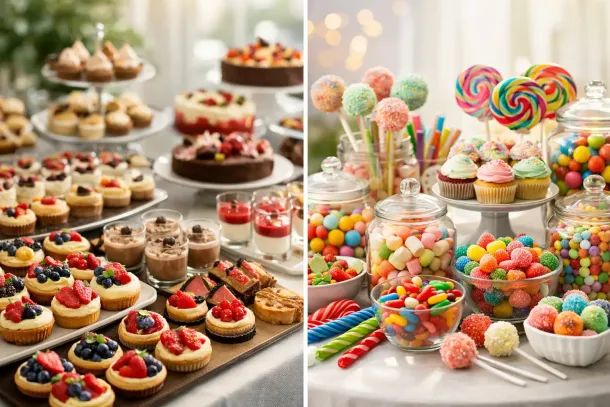
The moment after the meal often determines the mood of a celebration: conversations quiet down, the first guests get up – and suddenly, a lovingly arranged dessert table draws everyone's attention. But dessert buffet or candy bar? Both concepts look tempting, but they fulfill different needs for weddings, birthdays, baby showers, or company parties. Those who take a few minutes beforehand to consider the occasion, the guests, and the schedule will not only plan more beautifully, but also more stress-free.
Dessert buffet or candy bar: The difference
A dessert buffet is the perfect stage for exquisite desserts. It combines a variety of desserts into a harmonious moment of indulgence: slices of cake, cheesecakes, tarts, dessert glasses, macarons, Cupcakes Or classic desserts can shine together. The selection should cater to different preferences and give guests the feeling of creating their own personal dessert experience.
In contrast, a candy bar focuses on small, usually long-lasting treats. Candies, gummy bears, chocolates, lollipops, cookies, and dragees are decoratively presented in jars, bowls, or bags. It's playful, colorful, and particularly easy to adapt to a theme. Many guests help themselves as they go, fill small takeaway bags, or buy more later in the evening.
The difference, therefore, lies not only in the selection. A dessert buffet replaces or complements the classic dessert. A candy bar is more of a decorative sweet spot, a party favor, and a small snack station all in one.
When a dessert buffet is the better choice
A dessert buffet is particularly suitable when a sweet finale is to have a fixed place in the program. After a formal meal, at a wedding with many guests, or at a milestone birthday, it creates an opportunity to come together again. The selection appears generous without everyone having to order the same dessert.
This variety is a real advantage, especially with mixed guest lists. Some might want a creamy dessert, others a fruity tart, and still others a small slice of chocolate cake. Having several different formats makes it easier to cater to diverse tastes. The important thing is not to just put everything out haphazardly. A consistent theme in terms of color, flavor, and shape will create a harmonious overall impression from the many delicacies.
For an elegant celebration, the buffet can be designed in a more understated style: delicate dessert glasses, fine patisserie, A main cake and small accents of macarons or chocolates. Perfect for a casual garden party. seasonal tarts, Cheesecake slices, donuts, and fruity desserts are especially appealing. Lighter options are in demand in summer, while in autumn and winter, chocolate, nuts, caramel, or spices bring warmth to the table.
A dessert buffet, however, requires a bit more planning. Items that need refrigeration should only be set up shortly before serving, and for a long celebration, replenishing items is often better than hours of presentation. Therefore, those without their own venue crew should plan for a manageable, high-quality selection rather than an overloaded table.
The perfect amount for the dessert buffet
As a guideline, you can plan on two to three small dessert portions per person if a multi-course meal has been served beforehand. If the buffet is intended to completely replace dessert, three to four smaller portions per guest are more realistic. A cake as a visual centerpiece can be included, but it shouldn't be the only sweet treat if you're intentionally offering a variety.
Children usually gravitate towards familiar classics like donuts, cookies, or chocolate treats. Adults often appreciate more delicate, less sweet variations and fruity contrasts. A mix of familiar favorites and special pastries is therefore often the most enjoyable solution.
When a Candy Bar is more appropriate
A candy bar is ideal when decoration and a lighthearted feel are paramount. At a christening, baby shower, children's party, summer festival, or themed event, it quickly becomes a focal point. Colors can be coordinated with invitations, flowers, or tablecloths – for example, rose and white, pastel shades, gold, or a bold color palette to match the theme.
A candy bar is also practical for parties without a set dessert menu. Guests can help themselves throughout the evening, and the sweets generally stay appealing longer than cream or custard desserts. Small paper bags or cups also make them a charming gift for guests to take home.
Its limits are reached when a full dessert course is expected. After a festive dinner, a mere selection of sweets and gummy bears quickly seems insufficient. In this case, a candy bar can be a wonderful addition, but it cannot necessarily replace a sweet finale.
The guest demographics also play a role. For a party with lots of children, a candy bar is usually a hit. At a stylish evening event for adults, it works particularly well when it's carefully curated: high-quality chocolate, delicate pastries, elegant colors, and a few select varieties instead of a colorful abundance.
The strongest solution: Combine both intelligently.
You don't always have to make a strict choice. Especially at weddings or large birthday parties, a combination works very well: The dessert buffet opens the moment of indulgence after the meal, while a smaller candy bar invites guests to enjoy a relaxed snack later in the evening. This way, each station has its own purpose and the table doesn't look cluttered.
Spatial separation is key. Place the elegant desserts where guests can comfortably stand and choose. The candy bar can be positioned slightly apart, perhaps near the dance floor or the exit. This ensures a natural flow and allows both concepts to shine.
Those who want to use their budget wisely should first invest in the quality and variety of the dessert buffet. The candy bar can then be planned as a smaller, decorative addition. Conversely, at a casual celebration, a vibrant candy bar can be the centerpiece, complemented by a special cake for cutting.
This will make the dessert table a real eye-catcher.
A successful presentation thrives on height, tranquility, and repetition. Instead of arranging all the bowls in a single row, cake stands, tiered trays, and containers of varying heights create depth. A main cake or a particularly beautiful dessert can take center stage. The other elements frame it without diminishing its impact.
When it comes to decoration, less is often more. Two or three colors are enough to give the table a sophisticated look. Labels help guests choose their food and are especially useful if allergies, nuts, or alcohol are a concern. Napkins, small tongs, spoons, and plenty of plates aren't just essential—they ensure that the meal remains uncomplicated.
Also, plan the timing. A dessert table that's open at the beginning of the celebration will be used differently than a dessert buffet that's deliberately opened after the meal. A joint opening is suitable for a grand presentation. For a long, relaxed party, adding desserts later might be the better solution.
Which choice is appropriate for your occasion?
What matters is not which concept looks best in photos, but how you want your guests to celebrate. If you want to offer a diverse selection of fine desserts after dinner, a dessert buffet is the perfect choice. If snacking is meant to be part of the decoration and something that works well into the evening, a candy bar brings exactly that playful lightness.
For celebrations in Vienna and the surrounding area, both can be made especially personal: with a custom-designed cake, select classic pastries, and small favorite treats that coordinate in color and taste. Zoomserie embodies precisely this combination of handcrafted delight and a presentation befitting the occasion.
Ultimately, your dessert table should be one thing above all: an invitation to linger a little longer. Choose the option where, just thinking about it, you already know which first bite you want to offer your guests.