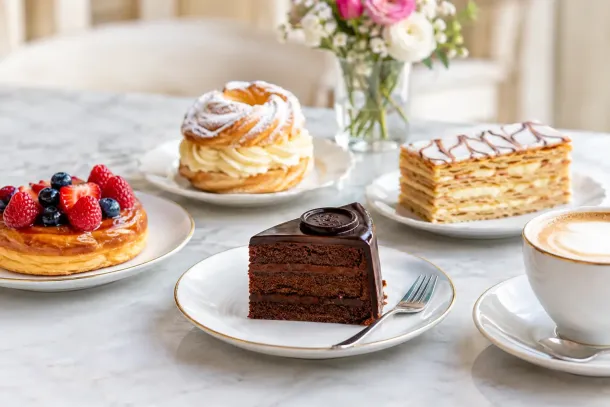
A glossy chocolate coating, the scent of warm apples and cinnamon, a spoonful of airy sweetness: Five classic Viennese confectionery They tell of pleasure that never needs to be loud to make an impression. They belong to a visit to a coffeehouse as much as to Sunday coffee, birthday celebrations, and those afternoons when a good dessert makes the whole day more pleasant.
Viennese desserts represent familiar flavors, precise craftsmanship, and a certain generosity. They are far more than just nostalgic recipes. When prepared correctly, they seem as contemporary today as they did back then: as a carefully selected slice of cake, as a dessert to share, or as the sweet centerpiece of a celebration.
Five classic Viennese confectionery styles with character
Not every classic is suitable for every occasion. While a Sachertorte scores points with its understated elegance, Kaiserschmarrn thrives on warmth and lightheartedness. It is precisely these differences that make Viennese pastries so appealing.
1. Sachertorte: Chocolate with attitude
The Sachertorte is probably the most famous ambassador of Viennese cake artistry. Its concept sounds simple: dark chocolate cake, a thin layer of apricot jam, and a smooth chocolate glaze. But there's a great deal of craftsmanship involved in making a good Sachertorte, and that goes far beyond just any chocolate cake.
The cake should be moist enough without being heavy. The apricot adds fruitiness and a subtle acidity, preventing the chocolate from being too overpowering. The glaze needs a pleasant bite but shouldn't crack when cut. Only this interplay gives the cake its characteristic, sophisticated elegance.
For many, a dollop of unsweetened whipped cream is an essential part of a Sachertorte. This isn't just an add-on: the light freshness softens the intense cocoa flavor and makes every bite more balanced. As a whole cake, it's a sure bet for... Invitations, anniversaries or birthdays, especially when different tastes come together at one table.
2. Apple strudel: The sound of crispy layers of dough
With apple strudel, it all starts with the dough. It should be stretched so thinly that it becomes almost translucent, yet still reliably enclose the juicy filling. This tension between the crispy crust and the soft apples is what gives it its unmistakable appeal.
Depending on the recipe, the filling includes tart apples, raisins, cinnamon, sugar, and toasted breadcrumbs. The breadcrumbs play an important role: they absorb excess juice, preventing the strudel from becoming soggy. A good apple strudel tastes fruity and warm, but not overly sweet. Cinnamon should complement the flavor, not overpower it.
Served fresh and still slightly warm, it's a treat for almost any time of day. With vanilla sauce, it becomes a sumptuous dessert; with whipped cream, a classic accompaniment to a coffeehouse meal. Anyone expecting guests and looking for something familiar with a special charm will almost always make a good choice with apple strudel.
3. Gugelhupf: Simplicity that tastes like home
The Bundt cake demonstrates how much personality can be packed into a seemingly simple cake. Its characteristic shape with the hole in the middle ensures a beautiful crust and a smooth, airy crumb. Whether classic with raisins, subtle with vanilla, or with a delicate hint of cocoa: it's a cake that doesn't need any fuss.
That's precisely why Bundt cake is so well-suited to relaxed gatherings. It's easy to cut, at a coffee table Share it and enjoy it even without a plate ceremony. A dusting of powdered sugar is often enough, as the focus is on the delicate, buttery dough.
Its strength lies in its versatility. For a family afternoon, it can be simple and heartfelt; as a gift, it comes across as loving and personal. When choosing one, pay attention to the texture: a good Bundt cake is airy but not dry. If it's too dense, it loses precisely that lightness that makes it so appealing.
4. Kaiserschmarrn: Golden-brown joy to share
Kaiserschmarrn is less of a quiet accompaniment to coffee and more of a dessert that makes an entrance. Torn pieces of batter, cooked in a pan, are caramelized to a golden brown and usually sprinkled with powdered sugar. It's served with plum compote, applesauce, or other fruity toppings that add depth to the sweet batter.
The consistency is crucial. A perfect Kaiserschmarrn is soft and airy inside, lightly browned on the outside, and pleasantly caramelized in places. It should be rich, but not greasy. Too little heat makes it pale and soggy, too much heat robs it of its delicate sweetness and makes the sugar bitter.
This classic dish is particularly well-suited to informal occasions. Placed in the center of the table, it's enjoyed together and instantly creates a warm atmosphere. Whether as the finale to a brunch or a sweet weekend surprise, it brings just that touch of Viennese coziness that doesn't require any planning.
5. Quark strudel: Delicate, creamy and pleasantly fresh
Alongside apple strudel, quark strudel deserves its place in the Viennese dessert repertoire. The filling of quark, egg, sugar, and often raisins is creamy, delicate, and wonderfully balanced by its mild acidity. Encased in thin strudel dough, it creates a dessert that can seem lighter than many rich cakes without sacrificing any of the deliciousness.
The contrast between the crispy exterior and the soft interior is particularly appealing. Vanilla sauce enhances the delicate flavor, while a touch of lemon zest can add freshness to the filling. For those who prefer not to focus on chocolate but are still looking for something festive, quark strudel offers an excellent alternative.
It's suitable for afternoon coffee as well as for a multi-course meal. The amount is key: as a dessert after a large meal, the portion can be smaller; for a coffee gathering, a generously cut piece is just right.
What really matters in Viennese classics
The best classic desserts don't rely on mere sweetness. They thrive on contrasts: apricot versus chocolate, fruit versus crisp pastry, creamy quark versus delicate acidity. Freshness is also crucial. A strudel tastes different when it's still warm, and a Sachertorte is even better when it's had time to rest and develop its full flavor.
For celebrations, the choice is therefore a matter of the occasion. An elegant cake is perfect for a birthday or as a gift. Strudel and Gugelhupf cakes convey a sense of approachability and generosity when many people are gathered. Kaiserschmarrn, on the other hand, is ideal when the shared enjoyment itself is meant to be part of the occasion.
For those who want to cater to different tastes, combining two styles is ideal: for example, a chocolate cake with a fruity or creamy dessert. This creates a coffee spread that looks lavish but doesn't taste monotonous. At Zoomserie, this idea can be beautifully expanded upon with classic and modern patisserie creations, perfectly suited to any occasion.
Enjoyment requires the right moment.
A classic Viennese pastry is not a chore or a mere souvenir. It's an invitation to take your time – for a coffee, a conversation, a birthday toast, or the first slice, freshly cut. Choose not only according to tradition, but also according to the occasion and the people at the table. Then a dessert becomes a moment to be fondly remembered.