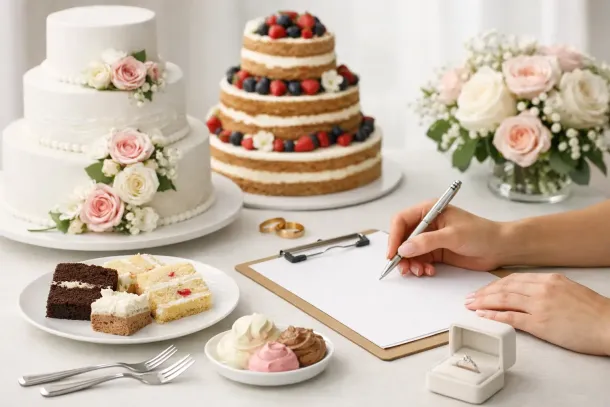
The moment the wedding cake arrives is often one of the most photographed moments of the day. It should look impressive – but above all, it should taste like you. This guide to choosing a wedding cake will help you turn your ideas, guest count, and budget into a cake you'll truly look forward to the first slice of.
Guide to choosing a wedding cake: Start with the enjoyment
Many couples start with Pinterest images or a color scheme. That's understandable, but the best order is different: First, consider what kind of indulgence you want to offer your guests. Should the cake be airy and light, creamy and elegant, or rich and chocolatey? If the wedding is in the height of summer, fruity, fresh components are often more suitable than very heavy fillings. For a winter wedding, on the other hand, something more substantial is perfectly acceptable.
Don't forget the rest of the menu. After a multi-course dinner, many guests would like a delicate, not-too-sweet dessert. If the celebration takes place in the afternoon, or if the cake replaces the main course, consider the following: Dessert buffet, It can be more generous and intense. There's no single flavor that suits every wedding. What's crucial is that it fits the flow of events, the season, and you.
Finding the right flavor
Classic combinations have their place when executed with high quality and balance. Vanilla with berries, chocolate with a fruity note, or lemon with a smooth cream are familiar favorites that many guests enjoy. For a more personal touch, you can incorporate a memory: for example, pistachio for a shared vacation, coffee for a first date at your favorite café, or a fruit that's a family tradition.
With multi-tiered cakes, each tier doesn't have to taste the same. Two or three complementary flavors create variety without making the selection unnecessarily complicated. Aim for a consistent theme: a light berry filling, a nutty option, and a classic chocolate filling make more sense than random individual choices. Tasting before deciding isn't just a minor detail; it's the most enjoyable part of the planning process.
How big should a wedding cake be?
The number of guests provides the starting point, not automatically the final size. Not every guest will take one piece, while others might like a second. Whether additional Candy Bar, The need for dessert also changes if dessert platters, ice cream, or a midnight snack are planned. As a practical guideline: If a cake is the only dessert, you should plan for almost all guests. If it's served alongside several other sweet options, the quantity can be somewhat smaller.
The desired portion size is also important. For the ceremonial cutting, choose pieces that are easy to serve and look elegant on the plate. A very tall cake looks impressive in photos, but doesn't necessarily mean more servings. Conversely, a shorter, wider cake can surprisingly feed a large number of guests.
When placing your order, be upfront about how many people are actually invited, whether children will be present, and what other desserts will be offered. An experienced pastry chef can then give you a realistic recommendation for the cake's diameter, number of tiers, and serving size. This will help you avoid two common disappointments: a cake that sells out too quickly or large quantities that end up untouched.
Real tiered cake or presentation cake?
Multi-tiered wedding cakes are eye-catching, but require careful planning. Each tier should be sturdily constructed to ensure smooth transport, assembly, and cutting. For smaller parties, a smaller, full-sized cake with complementary, attractively decorated individual portions might be a smarter solution. This maintains the grand visual effect while keeping the quantity manageable.
A presentation cake with additional kitchen cakes is also possible. This is particularly worthwhile if you want a very tall silhouette but don't need a huge quantity. The crucial thing is that the visual appeal and the individual pieces served complement each other in terms of taste and presentation. Guests shouldn't feel that the most beautiful part was merely for show.
Design: Beauty is what your celebration tells.
A wedding cake doesn't have to replicate every detail of the decorations. It looks much more harmonious if it incorporates one or two elements from your celebration: the flower colors, a clean, modern design, a delicate pattern from the stationery, or the understated elegance of the wedding dress. Especially at a wedding with lots of details, a simple cake can provide a sophisticated contrast.
Fondant, buttercream, textured surfaces, edible flowers, or delicate chocolate details create very different effects. Buttercream often appears soft, modern, and indulgent. Fondant allows for smooth, precise surfaces and intricate designs, but depending on the recipe and style, it can taste different from a cream-based surface. Don't rely solely on pictures; ask which finish is best suited to your desired filling, the season, and your venue.
Fresh flowers look beautiful, but they must be carefully selected. Not every bloom is edible or suitable for contact with food. Consulting a professional pastry chef or florist will prevent stems, pesticides, or unsuitable varieties from getting onto the cake. Edible flowers or sugar flowers are a safe, long-lasting alternative.
Use your budget wisely
The price of a wedding cake depends on more than just its size. Custom design, handcrafted flowers, special ingredients, elaborate tiered constructions, and delivery with assembly all require time and skill. Those who want to use their budget wisely should prioritize taste, sufficient quantity, and impeccable craftsmanship first. Only then can they decide which decorations will create the greatest visual impact.
Often, a single striking detail is enough: an elegant color gradient, a few perfectly placed blossoms, or an exceptional texture. A cake doesn't need to be completely covered in decoration to look festive. Less can look much more luxurious, especially at modern weddings.
When requesting a quote, ask what's included: tasting, tiered serving stands, transport box, delivery, on-site setup, and any decorative elements. Clear communication is essential for a relaxed wedding day. If the cake is to be presented at a specific time, the delivery should also be coordinated with that.
Ordering and timing without last-minute stress
Popular wedding dates and individual designs should be booked early. Once the date, number of guests, venue, and general style are finalized, it's worth starting to... first inquiry. For elaborately personalized cakes, a longer lead time is advisable, especially during the peak season between spring and autumn. Minor adjustments to the number of servings or decoration can often be arranged later – but the date itself should be confirmed.
Four pieces of information are particularly helpful for the consultation: your wedding date, the expected number of guests, a picture or description of your style, and information about any food intolerances and dietary requirements. The venue conditions also play a role. Is there a cool place for the cake? Who will receive it? How long will it be kept in the room before cutting? A delicate cream will react differently to summer heat than a more robust design.
At Zoomserie, cakes for special occasions can be individually designed. Especially for a wedding, personal consultation is invaluable, because only through taste, size, and reliable details does an initial idea become a cake that blends seamlessly into your day.
Consider allergies and different preferences.
If any guests have allergies or special dietary requirements, please let us know early on. Sometimes a completely adapted main cake is possible, while other times a separate smaller alternative is the better solution. This depends on the ingredients, potential cross-contamination, desired design, and the number of guests affected.
Clear labeling of dessert options provides reassurance and prevents awkward questions. Important: Don't promise your guests anything that hasn't been confirmed. Especially with severe allergies, accurate information is far more important than well-intentioned assumptions.
Ultimately, your wedding cake should be more than just a formality between dinner and the dance floor. Choose a creation that makes you pause for a moment when you cut it, look at each other, and think: This is exactly how our celebration should feel – personal, beautiful, and full of enjoyment down to the last bite.