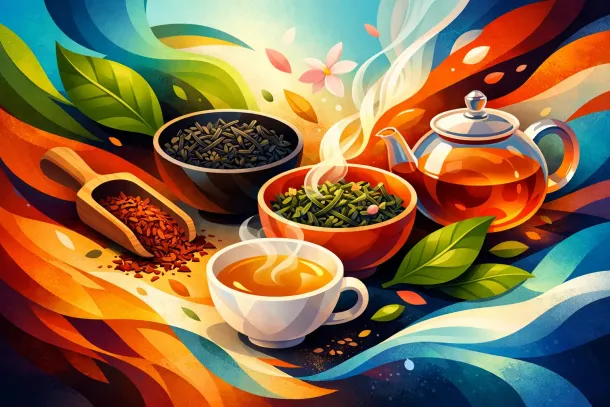
Anyone faced with a wide selection of loose-leaf tea quickly realizes: tea is not simply hot water with added flavor. Sometimes it has a delicate floral aroma, sometimes a robust malt scent, sometimes a fresh citrus or mint fragrance. This is precisely where its appeal lies. A good selection invites not only drinking, but also conscious enjoyment – whether alone in the afternoon, as a calming start to the day, or as a refined accompaniment to dessert, pastries, and small moments of pleasure.
Loose leaf tea often tastes higher quality than tea bags, and for good reason. The leaves are usually larger, the aromas more nuanced, and the infusion develops greater depth. At the same time, loose leaf tea requires a little more attention. Water temperature, steeping time, and the amount of tea used all play a more significant role. However, those who take the time to do so will be rewarded with a cup that displays considerably more character.
Why a good selection of loose tea makes all the difference
Not every tea collection needs to be huge. What's crucial is that it's well-curated. A harmonious selection of loose-leaf teas caters to different moods, times of day, and flavor profiles. This way, you avoid an overcrowded shelf and instead create a small repertoire from which you can choose the perfect tea.
For many, the journey begins with a classic black tea. It provides structure, feels familiar, and goes well with breakfast, cake, or a brief moment of peace in the morning. Green tea, on the other hand, offers more freshness, often with a slight bitterness. Herbal and fruit teas are more approachable because they are enjoyable without much prior knowledge and, depending on the blend, taste particularly smooth, spicy, or fruity.
The real difference lies in the details. A high-quality Darjeeling doesn't simply taste like black tea, but can have floral, nutty, or slightly muscat-like notes. A jasmine tea isn't about sweetness, but about elegance. A good herbal tea shouldn't be loud, but balanced. Choosing tea this way means choosing not just varieties, but moods.
Which varieties should not be missing from a selection of loose tea?
Those who crave variety don't need twenty cans. Often, a few well-chosen classics and some exciting accents are enough. Black tea is almost always included because it's strong, reliable, and versatile. Particularly popular are Assam for its malty depth, Ceylon for its clear spiciness, and Earl Grey for the delicate citrus note of bergamot.
Green tea offers a different approach. It has a lighter, often more herbal character and can be grassy, nutty, or smooth, depending on the variety. Sencha is a good starting point, while Genmaicha, with its slightly roasted character, is particularly pleasant. White tea is more suited to those who enjoy subtle aromas. It is quieter in expression, but often very refined and elegant.
Oolong is the perfect tea for those who want to experience a blend of flavors. It combines freshness and depth, sometimes creamy, sometimes floral, sometimes lightly roasted. It's complemented by herbal teas like peppermint, chamomile, or lemon verbena, as well as fruit teas with berries, apple, or hibiscus. These blends are especially popular for everyday use because they are uncomplicated and also suitable for evenings.
When serving sweets, it's worth choosing the right tea to complement them. A strong black tea pairs particularly well with chocolate. Fruity tarts Cheesecakes or similar desserts pair well with a lighter green tea or a delicate herbal blend. For pastries containing vanilla, cinnamon, or nuts, the tea flavors can be warmer and more rounded.
What you should pay attention to when buying loose tea
First impressions count even before the brewing process. Good tea leaves look cleanly processed and have a clear aroma. A tea should smell intense, but not artificially overpowering. Especially with flavored blends, a second look is worthwhile. If the aroma overpowers everything, often little of the actual tea remains.
Leaf size is also important. Large, whole leaves aren't automatically better, but they often indicate careful processing. With heavily broken leaves, the infusion becomes strong more quickly and sometimes bitter. This can be desirable, for example in breakfast teas, but it's not always the best choice for delicate varieties.
The quality of the blend remains crucial. With herbal and fruit teas, the ingredients should be clearly identifiable. High-quality blossoms, herb pieces, fruit peels, and spices contribute to a more natural flavor. Cheap blends often rely heavily on aroma and lack substance. This tastes strong at first, but rarely remains refined.
Proper storage after purchase also deserves attention. Loose tea prefers a dry, dark, and ideally airtight environment. Storing it near spices, coffee, or in direct sunlight will quickly cause it to lose its delicate aromas. Green and white teas are particularly sensitive, while strong black teas are somewhat more forgiving.
How to get the most out of loose tea
A very good selection of loose tea is of little use if every variety is treated the same. Black tea usually tolerates hot water and a slightly longer steeping time. Green tea is more sensitive and often becomes bitter if the temperature is too high. Herbal teas usually need enough time for their essential oils to fully develop.
It doesn't have to be a complicated ritual. A tea strainer, a good kettle, and a little intuition are often all it takes. Those who drink tea regularly quickly develop a sense of when an infusion hits just the right note. Some like their tea strong and distinctive, others prefer it mild and fragrant. Both are fine, as long as the balance is right.
Things get really interesting when tea is consciously paired with food. Especially in a gourmet kitchen or during a relaxing afternoon at home, tea is far more than just an alternative to coffee. A floral white tea can beautifully complement light pastries without overpowering them. A spicy chai pairs well with cakes containing caramel or nuts. And a perfectly brewed Earl Grey adds a touch of freshness to creamy desserts.
Choose tea according to the occasion, not just the type.
Many people buy tea out of habit. That's understandable, but it misses out on potential. Often it's more helpful to choose according to the occasion. For the morning, clear, invigorating varieties are a good choice. In the afternoon, something more aromatic and well-rounded is preferable. For the evening, herbal or caffeine-free blends are usually the more relaxing option.
Guests also play a role. Not everyone likes harsh green teas or very smoky notes. If you're expecting visitors, you're often better off with more approachable varieties – a balanced black tea, a delicate herbal blend, and perhaps a fruity option. This creates a selection without seeming arbitrary.
For special moments of enjoyment, it's worth being a little adventurous. Oolong, jasmine tea, or high-quality seasonal blends bring variety to the table and transform a simple cup into a small experience. Especially when the table is beautifully set, fine pastries Whether a cake is the centerpiece or not, tea often makes a more elegant accompaniment than one might initially think. This idea fits particularly well with a brand like Zoomserie, which consciously combines dessert and indulgence.
What makes a small, select tea collection better than too much choice?
Large selections are tempting, but can quickly become overwhelming. Opening too many tins risks losing aromas and pushing favorite teas into the background. A curated selection is often the better choice. It saves space, keeps teas fresh, and makes choosing easier.
A good starting point is a selection of three to six teas that truly fit your daily routine. Add to that perhaps a seasonal tea for autumn or winter, a special blend for guests, and one that's easy to combine with other teas. with sweets It can be combined. That's rarely all that's needed.
That's precisely what modern enjoyment is all about: not everything at once, but consciously selected pieces. A good cup of tea doesn't have to be complicated. It should be just right – for the moment, for your taste, and for what's on the table.
Those who take their time to choose their tea quickly realize how much character loose leaf tea can have. Sometimes soft and floral, sometimes spicy and deep, sometimes light and refreshing. And that's precisely what makes it so special: a small decision becomes a daily moment of enjoyment, bringing with it a surprising amount of atmosphere.