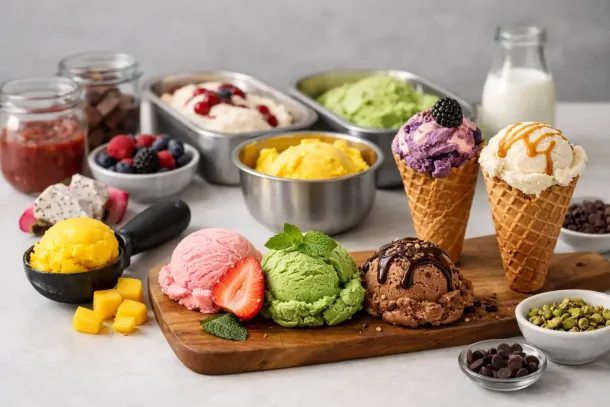
The first spoonful is decisive: Is the ice cream creamy, with a clear flavor, and surprising enough to entice you to take another spoonful? The trends in handmade ice cream are no longer just about increasingly unusual flavors. What's in demand is a treat that tastes of real ingredients, tells a story, and makes a special appearance at a coffee gathering or celebration.
Trends in handmade ice cream: Origin becomes perceptible by taste
Vanilla should simply taste like vanilla again – provided it is well-selected and carefully processed. The same applies to pistachio, hazelnut, strawberry, or chocolate. Handmade ice cream It wins when its main ingredient isn't buried under sugar, flavorings, or random toppings. Anyone ordering a particular variety wants to recognize its character: the slight acidity of ripe apricots, the warm roasted note of a nut, or the elegant bitterness of cocoa.
This doesn't mean that classics become boring. On the contrary: familiar varieties are gaining renewed attention through better ingredients, refined recipes, and precise textures. A creamy Fior di Latte can hold its own alongside an elaborately composed dessert creation if it's made with the same care.
For Viennese connoisseurs, this trend is a perfect fit for the coffeehouse moment. A small ice cream after an espresso, a cup for a stroll, or a delicate scoop to accompany dessert – quality is often revealed in subtle, clear flavors.
Fruity, tart, less heavy
Fruit is more than just a standard summer choice. Varieties with lemon, lime, raspberry, apricot, peach, or berries bring freshness to an ice cream menu that can otherwise quickly become very sweet and rich. Combinations that deliberately balance sweetness and acidity are particularly exciting: strawberry with basil, peach with verbena, or raspberry with a hint of pepper.
Restraint is key. Herbs, spices, and floral notes should enhance flavor, not overpower it. A sorbet can be tangy and direct. A milk-based ice cream with fruit, on the other hand, should retain its creaminess and not resemble a frozen smoothie.
The seasons are becoming more apparent. Strawberries have their time, as do apricots, plums, and late-summer blackberries. This creates variety and makes anticipation part of the enjoyment again. Not every favorite variety needs to be available all the time, as long as the current selection truly tastes seasonal.
Sorbet as a grown-up dessert idea
Sorbet is increasingly being perceived as a complete dessert. Good versions appeal not only to those who want to avoid dairy, but to everyone looking for a refreshing finish. A richly crafted fruit sorbet can cleanse between courses, lightly complement a cake, or play an elegant role in a dessert glass with fresh fruit and pastries.
The difference lies in the craftsmanship. Too much water makes the result hard and crystalline, too much sugar robs the fruit of its vibrancy. The right recipe ensures a melt-in-the-mouth texture that feels light yet remains full-bodied.
Dessert classics are coming to the ice cream counter.
Another strong impetus: The most popular pastry flavors are being reimagined as ice cream. Cheesecake, tiramisu, lemon tart, brownie, poppy seed, or caramelized apple work particularly well because they evoke familiar taste sensations. Crucially, the flavor must not only bear the name but also clearly reflect its inspiration.
Tiramisu ice cream combines coffee, a gentle mascarpone note, and a subtle cocoa bitterness. Cheesecake ice cream thrives on the interplay of freshness, creamy richness, and a crunchy element. This perfectly illustrates why ice cream and pastry go so well together: texture becomes an experience.
For Hosts These types of cakes are particularly appealing. They create a festive atmosphere without the need to serve a heavy slice of cake after a large meal. Served in small glasses and complemented with suitable pastries or fresh fruit, they create a dessert that looks uncomplicated yet tastes appropriate for the occasion.
Crispy, swirling, melting
Creaminess remains the foundation, but contrasts make ice cream memorable. Roasted nuts, caramelized crumbs, cookie pieces, chocolate chips, or fruit swirls add variety. The trend, however, is moving away from indiscriminately overloaded tubs. A good extra topping has a purpose: it adds texture, deepens a flavor, or provides a subtle counterpoint to the smooth ice cream.
Swirls are also popular, made from fruit puree, caramel, nut cream, or espresso, for example. They should be visible, but not turn every scoop into a candy concoction. Balance is especially important with handmade ice cream. Someone ordering pistachio wants to taste pistachio – not just green coloring and sugar.
When it comes to presentation, however, you can be quite generous. A beautiful ice cream sundae thrives on height, color, and different textures. For a celebration, individual components often appear more sophisticated than an overflowing sundae: a scoop of ice cream, a crispy pastry, a fruit accent, and a delicate pool of sauce.
Plant-based options become more precise and enjoyable.
Plant-based ice creams are no longer just a substitute. Oat, almond, coconut, or nut butter can create their own compelling base. Oat, in particular, pairs well with coffee and caramel notes, while almond brings a delicate marzipan flavor. Coconut has an intense taste and therefore doesn't suit every creation, but it can work wonderfully with lime, mango, or dark chocolate.
The challenge lies in achieving the desired creaminess without a dominant flavor of its own. A plant-based ice cream doesn't have to copy a classic dairy ice cream; it can be its own thing. Those who entertain guests with diverse preferences can create genuine comfort with a well-thought-out selection of dairy, fruit, and plant-based varieties, without compromising on enjoyment.
Small amounts, big effect
Ice cream remains popular for on-the-go consumption, but it's increasingly being bought as part of a more planned occasion. For birthdays, garden parties, baby showers, or a late summer meal, several small flavors are often more appealing than a single large one. This allows everyone to taste, compare, and find their own favorite.
A good combination needs contrasts. A fruity sorbet goes well with a creamy nut or chocolate ice cream. A strong coffee or caramel flavor is enlivened by citrus or berry. If you're serving cake, tart, or pastries, don't see the ice cream as competition, but rather as a complement: vanilla with warm apple pastries, raspberry sorbet with chocolate, or pistachio with a fruity tart.
For individual orders, it's worth thinking about the quantity, occasion, and serving style early on. Should the ice cream be a refreshing finale, part of a dessert buffet, or a delightful treat between coffee and conversation? This decision influences the choice of flavors, portion size, and accompaniments more than any short-lived social media trend.
What remains when the trend continues?
Some flavors come and go. The joy of a good scoop remains. Handmade ice cream truly shines when its origin, recipe, and presentation come together perfectly – and when it's just right for the moment it was chosen for.
Whether it's classic vanilla ice cream with Sunday cake, a vibrant fruit sorbet on a warm afternoon, or a selection of desserts for a crowd: don't just choose based on the most eye-catching name. Choose the flavor that makes you look forward to the next spoonful the moment you think about it.