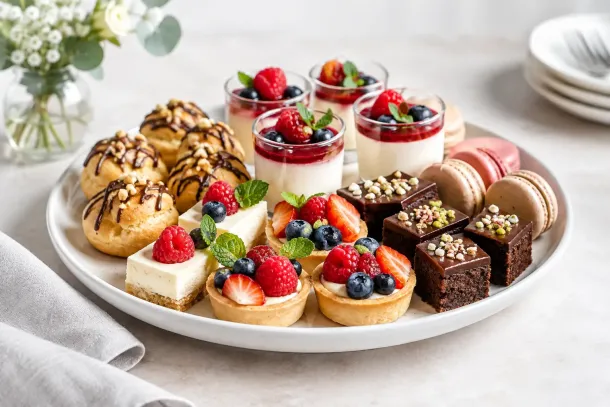
The moment before the first bite is crucial: A dessert platter that combines colors, shapes, and different textures makes even a casual coffee break feel like a special occasion. Arrange the dessert platter in a stylish manner This doesn't mean cramming as many sweets as possible into a small space. It's about an appealing selection, a calm and harmonious image, and enough variety so that everyone can find their favorite moment.
Whether it's a birthday, Whether it's a Sunday visit, an office party, or an evening with friends: a well-composed platter makes serving easier and immediately sparks conversation. With just a few decisions regarding selection, quantity, and arrangement, you can create a presentation that appears generous without being cluttered.
Start with a strong selection
The most beautiful effect is created through contrasts. For example, combine a creamy dessert with a crisp pastry, a fruity tart with a chocolatey slice of cake, and delicate macarons with something more substantial like mini donuts or small cake cubes. This makes the dessert platter not only visually appealing but also perfectly balanced in flavor.
A good guideline is three to five different desserts. For a small gathering, two to three different desserts are sufficient, provided there are several slices of each type. For a larger party, the selection can be wider. The crucial thing is that not everything has the same flavor or texture. Three very rich chocolate desserts might look elegant, but they lack fresh, light touches.
When choosing your cake, consider the occasion. Berries, lemon tart, cheesecake, and light pastries are particularly lovely for a summer afternoon coffee. In autumn or for festive evenings, nuts, caramel, dark chocolate, and spices can take center stage. For children's birthday parties, small, easy-to-eat cakes work better than large, creamy slices.
The right panel provides the framework
A large, flat platter, a wooden board, an elegant tiered serving stand, or several smaller plates will all work. For a modern, spacious look, a platter with some open space is particularly flattering. White porcelain makes colors pop, while dark stone or slate beautifully showcases light creams and fruits. Pastries, donuts, and small cakes look especially inviting on a warm wooden board.
Don't choose a platter that's too small. Leave space between the desserts so each one can stand out and be easily picked up. If the platter is very large, don't fill it completely. A deliberately left open space looks more sophisticated than a chaotic jumble.
When serving items of varying heights, a combination of elements is recommended: A taller item, such as slices of cake or a small bowl of dessert cream, forms the centerpiece, framed by shallower components. If you prefer not to use a tiered stand, you can also create height with small bowls or an inverted plate placed under a serving platter. However, stability always takes precedence over appearance – especially when guests are serving themselves.
How to arrange a dessert platter stylishly: From large to small
Start with the largest or most eye-catching pieces. A few slices of cake, tarts, or cheesecake portions will give the platter a clear direction. Don't arrange them in a precise circle, nor side by side like in a display case. A slightly staggered, loose arrangement looks more natural and makes the platter appear more abundant.
This is followed by medium-sized desserts such as Cupcakes, donuts or small glasses. They fill gaps without completely stuffing them. The smallest elements – macarons, chocolates, berries, or pastries – are added last. They add splashes of color and connect the larger shapes.
Work with odd groupings. Three macarons next to a slice of cake, or five berries in an empty space, usually look more vibrant than two identical slices in perfect symmetry. This doesn't mean everything should look random: deliberately repeat colors and shapes in different places. A pink macaron, for example, can echo the color of a berry tart, while dark chocolate in two or three spots adds depth.
It's particularly helpful to mentally divide the platter into zones. One zone can be fruity and light, another chocolatey and intense, with neutral pastries in between creating a smooth transition. This way, guests can find something that appeals to them at a glance.
Colors, fruits and delicate decoration with feeling
Fresh fruit brings almost any dessert platter to life. Berries, grapes, fig wedges, thin pear slices, or citrus zest add color and lightness. Use only dry, unblemished fruit to prevent any liquid from affecting creams, bases, or chocolate. Frozen fruit is hardly suitable for arranging because it loses juice when thawed.
Decoration should enhance the enjoyment, not obscure it. A few pistachios, chopped hazelnuts, chocolate shavings, or edible flowers are sufficient. Large amounts of powdered sugar look appealing in photos, but can quickly appear messy and mask the flavors. Similarly, strongly scented herbs like rosemary are only appropriate if they truly complement the dessert.
A subtle contrast in color and texture is often all it takes: glossy berries next to matte macarons, a velvety cream next to crisp shortcrust pastry, a dark chocolate accent alongside a light vanilla component. It is precisely these differences that make the platter look sophisticated and tempt you to try more than just one dessert.
Plan portions without serving too much.
As a guideline, you can expect two to three small desserts per person if the platter is served after a meal. If it's meant to be the main part of a coffee gathering, three to four pieces per guest are more realistic. Large slices of cake count more as two small portions.
It depends a lot on the guests. After a lavish dinner, fruity minis and light creams are often preferred to heavy cakes. On the other hand, during a long afternoon with coffee, an extra slice of cake is perfectly acceptable. It's better to offer a variety of easily portioned desserts rather than providing too much of one type. This reduces leftovers and increases the likelihood that everyone will find something they like.
Consider dietary requirements as well. A clearly separated, plant-based or nut-free option on its own small plate is more thoughtful than mentioning it only when serving. Use separate tongs, small forks, or serving spoons for different types of food. This is more hygienic and preserves the delicate flavors.
Temperature and timing determine the enjoyment
A beautifully arranged platter quickly loses its appeal if cream, custards, or ice cream remain warm for too long. Place chilled desserts on the platter only shortly before serving. Cakes and cheesecakes usually develop their full flavor better when they are not ice-cold – depending on the type, take them out of the refrigerator about 15 to 30 minutes beforehand.
Ice cream doesn't belong on a platter that will be sitting on the table for an extended period. It's better to serve it separately in chilled bowls or as a second, surprise course. Similarly, crusty pastries stay fresh best when added just before guests arrive. Those who prefer to be prepared can set out the platter, serving utensils, and decorations in advance and add the more delicate items last.
With Zoomserie, the selection for the occasion can be made particularly nicely. Cakes, pastries, Assemble a selection of pastries and small delicacies. This leaves more time for the reception – and the dessert platter becomes exactly what it should be: a generous invitation to indulge in a little more pleasure.