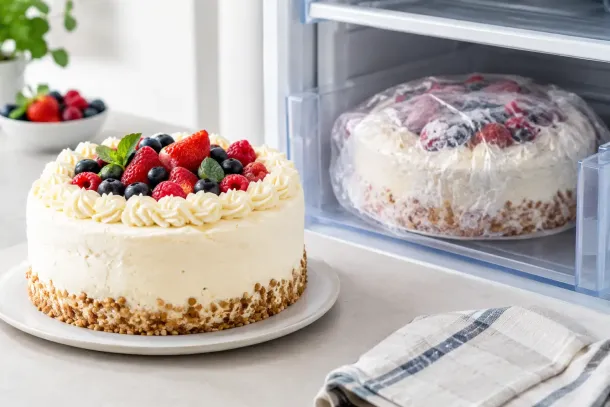
The birthday party is over, a few beautiful slices are still waiting in the fridge – and throwing away a good cake is simply out of the question. Can you freeze cakes? In many cases, absolutely. However, the type of cake, the decoration, and careful packaging are crucial. This way, a special dessert can still be enjoyed days or even weeks later.
Can you freeze cakes? It depends on the ingredients.
Generally speaking, many baked cakes, cheesecakes, and creamy fillings freeze surprisingly well. While cold temperatures don't reverse the aging process, they do preserve the quality the cake has at the moment of freezing. Therefore, the fresher the cake is when it goes into the freezer, the better it will taste after thawing.
Sponge cake and sponge cake bases, chocolate cakes, nut cakes are particularly easy to make, cheesecake and many buttercream cakes. Cream or mousse fillings can also work, provided they are well-structured. After thawing, a delicate cream may appear slightly softer, but the flavor usually remains wonderfully intact.
Caution is advised with cakes containing very watery fruit, crispy bases, or delicate decorations. Strawberries, kiwi, or fresh citrus segments often lose their firm texture when thawed and can release juice. A crisp cookie base can quickly become soft as a result. This doesn't mean the cake will be inedible—only that its appearance won't be quite as pristine as it was on the first day.
These cakes are particularly suitable
Cheesecake is a great choice for freezing, as are a moist chocolate cake or a classic nut cake. Buttercream also reliably protects the cake layers and filling from drying out. With a fondant cake, the inside usually freezes well, but the surface can become patchy, sticky, or dull due to condensation when thawing. For a perfect finish for the celebration, it's best to freeze the undecorated cake and decorate it after thawing.
Cakes with meringue, caramelized nuts, waffles, Macarons Crispy sprinkles also require some planning. They don't necessarily lose their flavor in the freezer, but they do lose their desired texture. It's best to add such elements fresh. The same applies to fresh flowers and very delicate chocolate decorations, which could easily break during packaging.
Freezing a cake correctly: Preparation makes all the difference
A partially cut cake can be frozen just like a whole one. For small households, individual slices are often the more convenient solution: they thaw faster, and you only take out what you fancy. A whole cake is ideal if you want to prepare part of the celebration in advance or if there are several portions left over after an event.
First, chill the cake completely. Warm or lukewarm cakes will retain moisture in the packaging, which will later turn into ice crystals. For very soft cream cakes, a short, uncovered stop in the freezer helps. Once the surface is firm, less will stick to the foil when wrapping.
A few careful steps are sufficient for a good result:
- If necessary, cut the cake into portions and place them on a sturdy board or plate.
- Wrap each piece or the entire cake tightly in cling film to minimize the amount of air that gets to the dessert.
- Then add a second protective layer, such as a tightly sealing freezer container or freezer bag.
- Label the packaging with the variety and date. Especially after a few weeks, this small help makes a big difference.
- Freeze the cake on as flat a surface as possible so that the cream, decoration and cake layers retain their shape.
The double packaging isn't excessive. It protects against freezer burn and prevents the cake from absorbing odors from other foods. Nobody wants their delicate vanilla cream suddenly having to compete with frozen vegetables for attention.
How long do frozen cakes keep?
For best flavor, it's recommended to enjoy cakes within two to three months. Many varieties can be stored safely for longer at a constant -18°C, but over time, aroma, texture, and moisture levels can deteriorate. Creams, in particular, can easily lose volume, cake bases can become drier, and flavors can become less pronounced.
For cakes with fresh fruit, delicate cream, or elaborate decorations, a shorter storage period is advisable – ideally a few weeks. Important: Freezing extends shelf life but does not replace good initial quality. Anything that was already old, dry, or unrefrigerated for a long time before freezing will not become fresh again through freezing.
Caution is also advised with recipes containing raw eggs. Freezing does not reliably kill all germs. Such desserts should only be made with safe, fresh ingredients, kept refrigerated at all times, and consumed promptly. If in doubt, a freshly prepared alternative is the more relaxed choice.
Defrosting without soft floors and condensation
The easiest way is via the refrigerator. Take the frozen cake out of the freezer and let it thaw slowly in its packaging. Individual slices usually take four to six hours, depending on their size; a whole cake is best thawed overnight. Keep the packaging closed initially so that condensation collects on the outside and not on the surface of the cake.
Only remove the foil or container once the cake has completely thawed. Then let it stand at room temperature for about 15 to 30 minutes. This allows the butter, chocolate, vanilla, and fruit to develop their full flavor much more beautifully than if it were straight from the refrigerator.
Time pressure is understandable, especially when guests are expected. However, thawing on a radiator, in the sun, or at a high room temperature is not a good shortcut. The outer layers will soften while the inside may still be frozen. Creamy or mousse-like cakes also suffer from reduced stability. It's best to plan ahead – that way, the cake will remain as elegant as you intend to serve it.
Frequently asked questions about freezing cakes
Can you freeze a cream cake?
Yes, many cream cakes can be frozen, especially if the cream is stabilized and the cake doesn't contain large amounts of fresh, very juicy fruit. After slow thawing, the texture may be slightly softer. For a nice finish, you can add fresh berries or a few chocolate shavings before serving.
Can you freeze a cake that has already been cut?
Yes. It's best to cut clean portions and wrap them individually. This preserves the cut edges, prevents unnecessary thawing of the entire cake, and gives you a little moment of enjoyment later, exactly when you need it.
Can a thawed cake be refrozen?
It's best not to. Refreezing significantly degrades the texture, and with delicate ingredients, the hygiene risk increases. Therefore, it's better to thaw in portions. Store completely thawed food in the refrigerator and consume it as soon as possible.
Freezing a cake is not a compromise if it is fresh, carefully wrapped, and thawed slowly. Rather, it is a wonderfully practical way to prepare a treat in advance, appreciate leftovers, and save a special piece even after the celebration.