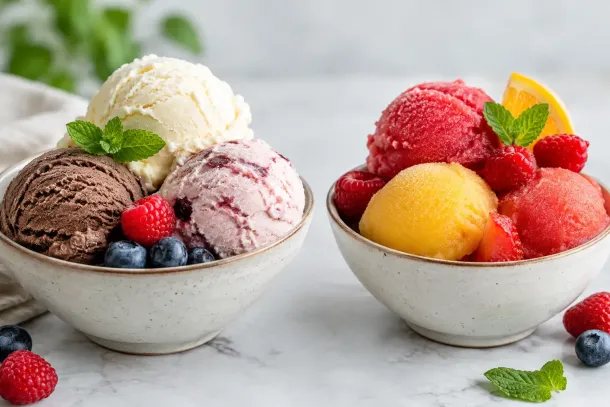
A warm afternoon, a set table in the courtyard, or the last sweet touch after a festive meal: When it comes to the question ice cream or sorbet It's about far more than just a flavor. It's about texture, freshness, the occasion, and what you're really craving. Both are wonderful desserts – they just tell different stories of enjoyment.
Ice cream or sorbet: The difference begins with the ingredients
Ice cream thrives on its creamy, rich texture. Depending on the variety, milk, cream, eggs, or other dairy components form the base. These are then complemented by ingredients such as real vanilla, chocolate, nuts, caramel, or fruit. The result is soft, dense, and delightful on the palate. good ice cream It can be opulent without seeming heavy: it melts slowly, retains its aroma for a long time, and turns a small cup into a real indulgence break.
Sorbet offers a different perspective. Traditionally made with fruit puree, water, and sugar, it typically contains no milk. Ripe strawberries, juicy mango, lemon, raspberry, or passion fruit are clearly the focus. Sorbet is lighter, more direct, and often particularly refreshing. Its flavor is more reminiscent of the fruit itself—provided it is of sufficient quality and ripeness.
The difference isn't simply "creamy versus fruity." Ice cream plays with depth and mouthfeel, while sorbet offers clarity and freshness. Both can be sophisticated, intense, and surprising.
When ice cream is the right choice
There are moments that call for creamy comfort. After a long day, a scoop of pistachio, hazelnut, or dark chocolate ice cream can be just the thing. Ice cream also pairs beautifully with coffee, cake, or a dessert plate, creating a harmonious and unifying element.
It can also shine at celebrations. A delicate vanilla ice cream accompanies warm tarts, brownies, or apple desserts without stealing the show from the main ingredients. Chocolate ice cream pairs well with berries and crusty pastries, while nut and caramel varieties create an exciting contrast to slightly tart fruits. If you're expecting guests with diverse tastes, a small selection of creamy classics is usually the right choice.
Ice cream is also a good choice when a dessert is meant to be filling and satisfying. Its fat content carries flavors, gives it its distinctive smoothness, and ensures that the taste doesn't disappear immediately. This is an advantage – but it also depends on the occasion. After a rich meal, it might be too heavy for some guests.
Creamy doesn't automatically mean heavy.
The key is balance. High-quality ice cream doesn't just taste sweet, but clearly reveals its ingredients. With vanilla, you should be able to taste real vanilla, with hazelnut, the roasted hazelnut, and with strawberry, not just sugar. Good production is also evident in a smooth and pleasant texture – not watery, not crystalline, and not unpleasantly greasy.
Those who prefer something lighter don't have to forgo ice cream. Fruity milk-based ice creams or a small scoop alongside fresh fruit add creaminess to the plate without overpowering the dessert.
When sorbet is particularly good
Sorbet is the ultimate refreshing treat among frozen desserts. On hot days, after spicy dishes, or between courses, it brings a touch of lightness to the moment. Lemon, lime, and grapefruit are vibrant and invigorating, while mango, peach, or berries offer a softer, sun-kissed fruitiness.
Especially after a multi-course meal, sorbet is often the more harmonious choice. It cleanses the palate and creates a balance between strong flavors. Therefore, lemon or lime sorbet is often served as a refreshing treat before dessert or as a light finale. It's equally ideal for a summer brunch, a garden party, or an afternoon with friends: uncomplicated, elegant, and never too much.
For people who want or need to avoid dairy products, sorbet is often a welcome alternative. However, it's worth taking a look at the ingredients and production process, especially for those with intolerances or vegan diets. Some recipes contain additional ingredients, and contact with dairy products may occur during production. To be on the safe side, it's best to ask specifically before ordering.
Fruit needs quality
With sorbet, nothing can be hidden behind a thick cream. Its quality depends entirely on the fruit. Ripe fruit provides natural sweetness, color, and an aroma that doesn't have to be artificially strong. If the fruit is too acidic, too watery, or too subtle, the sorbet will taste flat.
A successful sorbet strikes the perfect balance: it's intensely fruity, pleasantly sweet, and frozen so creamily that it doesn't taste like frozen juice. This delicate texture is achieved through a precise ratio of fruit, sugar, and water. That's where the craftsmanship lies.
The best decision depends on the occasion.
For a Birthday buffet You don't have to choose between ice cream or sorbet. On the contrary: the combination makes the selection more interesting. A creamy variety for chocolate lovers, a nutty option for fans of classic flavors, and a vibrant fruit sorbet for those who prefer something fresh – this way, almost every guest can find their favorite moment.
Ice cream pairs particularly well with an elegant cake, provided its flavor doesn't overpower the cake. Vanilla, yogurt, or a delicate nut ice cream complement many cakes and tarts harmoniously. If you're serving a fruity cake or a light mousse, a sorbet can echo the character of the fruit and add extra excitement to the dessert.
The season also plays a role. In the height of summer, a raspberry, lemon, or mango sorbet is often irresistible. As the evenings grow cooler, creamy flavors like chocolate, coffee, hazelnut, or caramel really shine. This isn't a rule, but rather an invitation to tailor your enjoyment to the mood of the day.
How to serve successfully at home
Good ice cream deserves a little attention. Take ice cream out of the freezer a few minutes before serving so it can develop its creamy consistency. Sorbet can also be brought to room temperature briefly, but should remain fresh and frozen solid. Waiting too long will diminish the texture and elegance of both.
Pre-chilled bowls help keep the dessert fresh for longer. Crispy wafers, roasted nuts, chocolate chips, or a warm cake are perfect for ice cream. Sorbet is enhanced with fresh fruit, herbs like mint or basil, and a delicate biscuit. Less is often more: the ice cream should remain the star of the show.
If you plan for guests, For dessert, allow about two small scoops per person. After a rich meal, less is appropriate, while at a summer ice cream station, a little more is welcome. It looks especially beautiful when creamy and fruity flavors are presented together – colorful, inviting, and perfectly suited to the occasion.
Enjoyment should be personal.
There's no single best choice. Ice cream offers creamy depth, sorbet provides crisp freshness. Sometimes it's the warm chocolate cake that decides, sometimes the craving for lemon, sometimes the desire to offer all guests a suitable option. At Zoomserie, this very variety is part of the sweet pleasure: Choose according to your mood, the season, and the occasion – and feel free to let two flavors compete for the first spoonful.