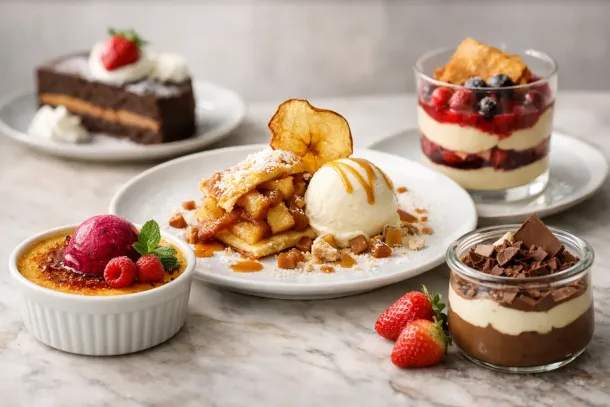
A warm apple scent, the first forkful of Sachertorte, creamy rice pudding with cinnamon: some desserts taste like childhood, coffee houses and long Sundays. Traditional desserts reinterpreted This doesn't mean replacing those memories. It means combining their best flavors with subtle contrasts, contemporary lightness, and a presentation that will delight even on a festively set table.
Why familiar desserts may taste different today
Classics possess something that no fleeting trend can simply replicate: they are emotionally grounded. A slice of Bundt cake, apple strudel, or a Swiss roll evokes expectations. This is precisely where the great opportunity for modern patisserie lies. Those who recognize the familiar concept are curious to try it. And those who then discover a particularly crisp texture, a fruity acidity, or a surprisingly light creaminess remember it.
Reinterpretation, therefore, doesn't begin with flashy decoration. It begins with respect for the original. What component makes the dessert unique? In Kaiserschmarren, it's the caramelized, airy texture of the batter. In Topfenstrudel, it's the mild creaminess and the paper-thin pastry. In Sacher torte, it's the interplay of rich chocolate sponge and apricot. If this core remains perceptible, then much else can change.
This is particularly appealing for hosts: a familiar dessert instantly creates a sense of connection, yet in a new form, it appears deliberately chosen. In this way, a classic flavor becomes a conversation at the table, and a coffee break turns into a small occasion.
Traditional desserts reinterpreted: Balance is key.
A dessert doesn't automatically become more modern simply because it's smaller, taller, or more colorfully presented. Good reinterpretations are based on a clear flavor concept. They reduce the heaviness where it would be too much and intensify the flavor where it needs more expression.
Lightness instead of deprivation
Many traditional sweets They are generous: butter, whipped cream, sugar, and rich pastries are part of their character. And that's how it should stay. Nevertheless, a finely balanced acidity can make the sweetness more precise. Apricot, red currant, lemon, sour cherry, or passion fruit bring freshness to chocolate creams, quark fillings, and vanilla desserts.
Lightness doesn't mean sacrificing enjoyment. An airy mousse can often be more exciting next to a crisp base than a very thick layer of cream. A fruity compote provides a clear contrast to warm pastry. And a smaller, carefully composed tartlet can appear more festive than a dessert that impresses primarily through its size.
Texture brings memories to life
The mouthfeel often determines whether someone takes a second bite. Traditional recipes offer many starting points: crispy strudel dough, crumbly tart base, light and airy sponge cake, roasted nuts, or velvety cream. A modern version doesn't need to showcase every texture at once. Two or three deliberately chosen contrasts are sufficient.
An apple dessert, for example, is enhanced when juicy apples meet a delicately buttery crumble and a cool vanilla cream. In a chocolate creation, a smooth glaze can be combined with a crisp cocoa base and a fruity apricot layer. This way, the flavor remains familiar, yet appears more complex and refined.
The form changes the occasion
A classic dessert can be reinvented as a cake, tart, dessert in a glass, or as a single pastry. The form is not secondary, as it determines when and how a dessert is enjoyed. A large cake is the natural centerpiece of a birthday celebration. Individual portions are perfect for... Receptions, team celebrations or a dessert platter where each person wants to try several flavors.
However, not every dessert is suitable for every shape. A strudel thrives on freshly baked crispness and shouldn't wait for hours for its moment. A mousse cake, on the other hand, can be prepared in advance and portioned neatly. Therefore, those ordering for guests or planning a dessert themselves should choose not only based on their favorite type, but also on the time of day, the number of people, and the serving situation.
Viennese classics with a new perspective
Viennese dessert tradition provides a particularly beautiful foundation for creative developments. It is characterized by pastries, fruits, chocolate, nuts and delicate creams – flavors that never need to be loud to be unforgettable.
A Sacher-inspired creation could, for example, use dark chocolate, apricot fruit, and a lighter cream without losing its unmistakable character. The apricot should be more prominent, rather than just a sweet layer. A subtle pinch of salt or a roasted cocoa base can add further depth to the chocolate flavor.
Even apple strudel offers far more than the classic slice dusted with powdered sugar. As a tart, it combines a crumbly crust with spiced apple pieces and crispy crumbs. As a dessert served in a glass, it can consist of apple compote, vanilla cream, and buttery crumble. Crucially, cinnamon, apple, and the delicate buttery flavor must remain the main focus. Without this signature, what remains is just another generic apple dessert.
The strength of rice pudding lies in its simplicity. A modern version doesn't need complicated techniques. Good milk, real vanilla, a silky consistency, and a contrast of tart fruit compote or caramelized nuts are all you need. This is often a better choice than an overloaded combination that loses the comforting feeling of the original.
Seasonal ingredients give classic dishes a new rhythm
A reinterpretation feels particularly authentic when it's inspired by the seasons. In spring, strawberries, rhubarb, and citrus notes pair well with quark, sponge cake, and vanilla. Summer brings berries, apricots, and light yogurt creams to the table. In autumn, apples, pears, plums, poppy seeds, and roasted nuts can take on a warmer, spicier character. In winter, orange, gingerbread spice, hazelnut, and dark chocolate lend festive character to desserts.
Seasonality isn't a rigid set of rules. A chocolate cake, of course, works all year round. But a seasonal element prevents it from tasting the same every time. It transforms a familiar favorite into a creation that suits the occasion and the mood.
For holidays and special celebrations, it's also worth considering the color and how it's cut. A cake should look elegant, but it also needs to be easy to share. Fresh fruit, clear layers, and appropriate decorations transform the dessert into a visually appealing gift for everyone – without the appearance overshadowing the taste.
What a successful reinterpretation should not do
Sometimes the desire for innovation becomes an end in itself. Then the very flavors that make a dessert memorable disappear. Too many spices can overpower a delicate quark cream, a dominant exotic fruit can disrupt the balance of a traditional German classic, and pure sweetness is no substitute for good composition.
The same principle applies to appearance: an elaborate pastry can be artistic, but it should entice the palate with the first bite. Edible decorations that have no connection to the flavor, or very hard elements on a delicate cream, are not always an advantage. Good pastry chefs combine craftsmanship, taste, and presentation so that nothing seems accidental.
For a relaxed family afternoon, a cake can be simple and generous. For an anniversary, a dinner, or a stylish coffee gathering, a more elaborate design is worthwhile. It's not about completely transforming every classic recipe. It's about finding the perfect expression for the occasion.
Choosing the right dessert for your occasion
Anyone planning a celebration can use traditional flavors as a safe starting point and then decide on the desired effect. If the dessert should be familiar and comforting, apple, vanilla, nut, or poppy seed are wonderful choices. If it should be elegant and festive, chocolate with fruit, delicate tarts, or multi-layered cakes are ideal. For a large number of guests, different individual portions create variety, while a personalized cake visibly puts the occasion in the spotlight.
At Zoomserie, classic dessert ideas meet modern patisserie for small moments of indulgence and large celebrations. Don't just choose any sweet treat: choose a dessert whose flavors suit your guests, the season, and the occasion. That's when the final course becomes the moment everyone's still talking about on the way home.