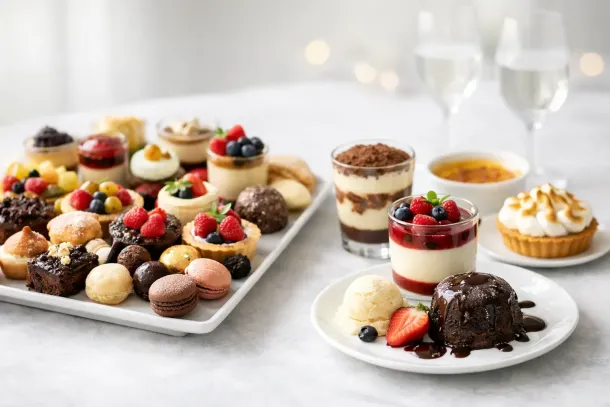
The cake is cut, the conversations become more lively – and at the dessert table it is often decided whether a nice celebration becomes a truly memorable moment of enjoyment. Dessert platter or individual desserts It's not just a matter of taste. It's about the number of guests, the occasion, the available space, the budget, and how relaxed you want to be as the host.
A wide selection looks festive, but it also needs to suit the occasion. Different rules apply to a relaxed afternoon with family than to a reception, a meeting, or a wedding. With a few thoughtful considerations, you can find a solution that looks appetizing, remains manageable in terms of cost, and is enjoyable until the very last bite.
Dessert platter or individual desserts: Which is better?
A dessert platter brings together several small delicacies on a generously sized plate or a stylishly arranged tray. It invites sharing, tasting, and returning for more. Individual desserts, on the other hand, are prepared in individual portions: for example, as a small cake, cupcake, Dessert in a glass, tartlet or pastry piece.
The decision is less of an either-or than many initially think. First, ask yourself: Should dessert be part of a relaxed get-together or a clearly structured part of the program? Would guests like to serve themselves, or should everyone receive a ready-made portion at the same time? The clearer the occasion, the easier the choice.
The dessert platter: Generous, sociable, versatile
A dessert platter brings movement to the table. Guests help themselves, compare their favorites, and perhaps even take a second small piece. This format is particularly inviting at private parties, brunches, baby showers, or casual afternoons. The platter becomes the focal point without making the moment feel stiff or formal.
Their greatest advantage is their variety. Fruity tarts can be made alongside... creamy cheesecake Macarons stand alongside small chocolate desserts, and delicate pastries next to seasonal creations. This means that both chocolate lovers and those who prefer fresh, light flavors will find something to suit their taste. It's a real advantage for groups with diverse preferences.
The platter also makes a strong visual impression. Different colors, shapes, and textures create an image that evokes a festive atmosphere even before anyone has tasted it. Anyone planning a beautifully set table, flowers, or a coffee station will create a harmonious and inviting dining experience.
A dessert platter requires some space and a good sense of quantity. For very small gatherings, it can be more elaborate than necessary. If the desserts are going to be ready for an extended period, delicate items should only be arranged shortly before serving. Creamy desserts, ice cream, or products with fresh fruit deserve special attention.
Individual desserts: Precisely portioned and elegantly served
Individual desserts are the uncomplicated choice when structure is key. Each person receives their own portion, which can be served neatly and appears complete on the plate. This is ideal for seated meals, company parties, receptions with a short timeframe, or events where many guests are served simultaneously.
This makes planning more reliable: one person, one dessert – or two small pieces if you intentionally want to offer more variety. There's less uncertainty when replenishing the food, and you don't have to guess how generous individual guests will be. This is especially helpful with larger parties, allowing you to keep a clear overview of quantities and costs.
Individual desserts also convey a high-quality impression when carefully selected and presented. A small cake with delicate decoration, a dessert in a glass, or an elegant tartlet can add a special touch to the occasion. For birthdays, this option can be beautifully combined with a personalized cake: the cake creates a shared moment, while the small desserts complement the buffet without any additional cutting required.
The downside: The selection is usually more limited per guest. Those who enjoy trying different things might miss the spontaneity of a platter. Furthermore, many individual portions result in more packaging and dishware. For a very casual party, this can appear more formal than intended.
Accurately estimating the number of guests
The number on the guest list is an important starting point, but not the only one. Also consider the time of day, the menu, and the composition of the group. After a large dinner, people usually eat smaller portions than at an afternoon gathering where coffee and dessert are the focus. Families with children often have different appetites than a team after a business lunch.
As a guideline for a dessert platter, two to three smaller portions per person are suitable if cake, fruit, or other dishes are also being offered. If dessert is the main focus of the afternoon, three to four portions are more appropriate. For individual desserts, one regular portion per guest is usually sufficient. Plan for a small reserve for particularly long celebrations or for guests with a big sweet tooth.
It's important not to confuse variety with excess. Four well-chosen flavors often make a better impression than ten variations, many of which end up uneaten. A harmonious mix of chocolate, fruit, something creamy, and a lighter component offers enough choice and remains calm and sophisticated on the table.
The occasion sets the pace
For a small birthday party, dessert can be personal and playful. A platter with different favorite treats sparks conversation, while a cake symbolizes the moment of blowing out the candles. For a child's birthday, smaller portions are often more practical because they can be eaten without much cutting and serving.
At an office party, the flow is just as important as the enjoyment. Individual desserts can be served quickly and are well-suited for standing room only. Small, easily edible portions are usually more practical than very creamy or crumbly pieces. However, if the team is meant to gather in a relaxed atmosphere after a workshop, a varied dessert platter can create just the right relaxed mood that's welcome after a busy day.
For receptions, openings, or elegant evening events, small individual portions make a particularly sophisticated impression. They are easy to pick up without having to balance cutlery and still look presentable even after the initial rush. A dessert platter, on the other hand, is ideal if the buffet itself is intended as part of the presentation and offers ample space for guests to linger.
The best solution is often a combination.
You don't have to make a strict choice. A central cake plus individual desserts combines ritual and convenience. A dessert platter with several clearly portioned glasses or mini cakes, on the other hand, offers variety without creating chaos when serving.
This combination is particularly suitable for celebrations with different generations. Some guests would like a small, light dessert, others would like a slice of cake, and still others would prefer to try a little of everything. With a carefully curated selection, you give everyone this freedom without creating an overloaded buffet.
With Zoomserie, the Dessert selection to suit the occasion Put together a selection – from classic and familiar to modern and colorful. The key is not to offer as much as possible at once, but to choose a style that suits you and your guests.
This will make the dessert buffet harmonious.
Start with a flavor that's almost always popular, like chocolate or vanilla. Complement it with a fruity option and a lighter, less sweet component. If you're planning on adding nuts, alcohol, or special flavorings, consider these as additional choices, not the only option.
Temperature also plays a crucial role in the enjoyment of desserts. Cold desserts should remain well chilled until just before serving. Pastries and tarts, on the other hand, often develop their full flavor if they are not served directly from the refrigerator. Place small plates, napkins, and dessert forks (if needed) alongside them. For a platter, appropriate serving utensils are essential – this ensures the presentation remains appealing, even when many guests are helping themselves.
If allergies, intolerances, or vegan diets are a factor in your party, be sure to plan at least one clearly identifiable alternative. This is not only thoughtful but also prevents any guests from missing out on the best part of the celebration.
In the end, choose not the most elaborate, but the most suitable presentation. A generous dessert platter transforms an afternoon into a shared tasting experience; elegant individual desserts lend your event a sense of calm and precision. And when the first guest smiles because their favorite dessert is waiting for them, the sweet finale has already been a success.